







Explore local history through music
Human beings have always expressed themselves through music. Archeologists have found remains of musical instruments dating back 50,000 years and early humans likely used their voices to sing before that. Studying the arts is a helpful way to understand history since it teaches us about the culture of a place and how people react to their world. Learning about and listening to the music made in our city is a wonderful way to engage with local history.
Read on to discover some local musical groups with a long Topeka history. I've also highlighted resources you can use to do your own research into groups you've heard about.
The Topeka Jazz Workshop
Local musicians helped popularize jazz in Topeka. In 1953 jazz drummer Mel Kime arranged a concert series at the Jayhawk Hotel with other Topeka musicians. This eventually became the Topeka Jazz Workshop Band who had their first live show at Washburn University’s MacVicar Auditorium in 1960. The band went on to become a non-profit organization dedicated to the performance and promotion of jazz music. The Topeka Jazz Workshop concert series had its first season from 1969-1970. The Workshop also created a scholarship fund for promising high-school aged musicians to study jazz.
The Topeka Jazz Workshop has given local jazz musicians the opportunity to collaborate with noteworthy artists such as Byron Stripling, a former member of the famous Count Basie orchestra. This historic big band still hosts an annual concert series with a yearly concert at the library. Their next library performance will be Aug 9, 2026.
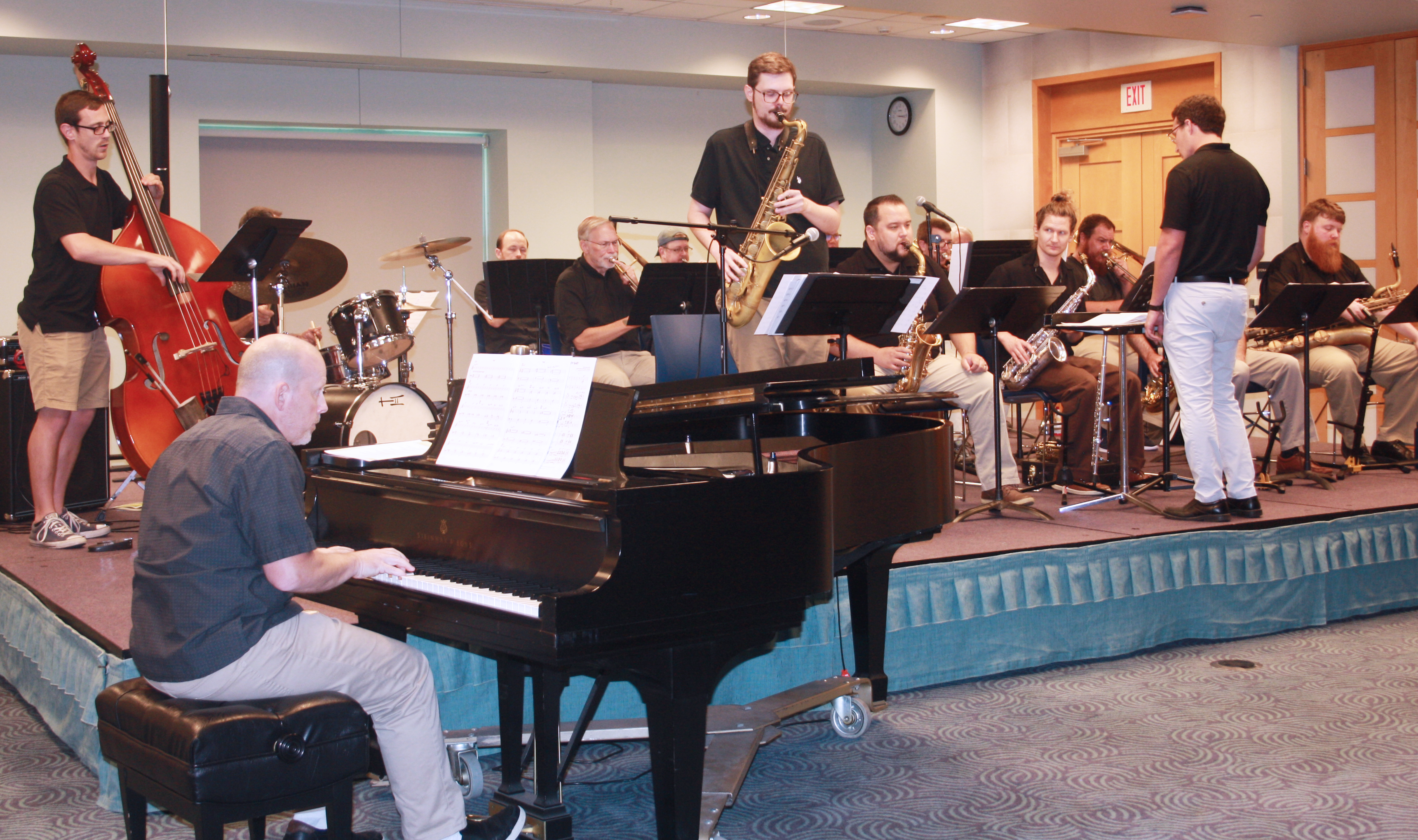
Topeka Jazz Workshop Band performing at library August 5, 2024
Kansas
Perhaps the most famous musicians who call this city home, Kansas is the group behind classic rock radio staples Carry on My Wayward Son and Dust in the Wind. Before the ensemble traveled the world on tour and sold out New York City’s Madison Square Garden, they spent the early 1970s perfecting their sound from Topeka garages and playing in local bars. The band was originally made up of guitarist and keyboardist Kerry Livgren, vocalist and keyboardist Steve Walsh, drummer Phil Ehart, bassist Dave Hope, violinist and vocalist Robby Steinhardt and guitarist Rich Williams.
Record producer Wally Gold discovered the band in 1974 and they released their first self-titled album soon after. The album art of Kansas featured the iconic Tragic Prelude mural that graces our state’s capitol building, and the band was praised for their unique blend of orchestral and progressive rock music.
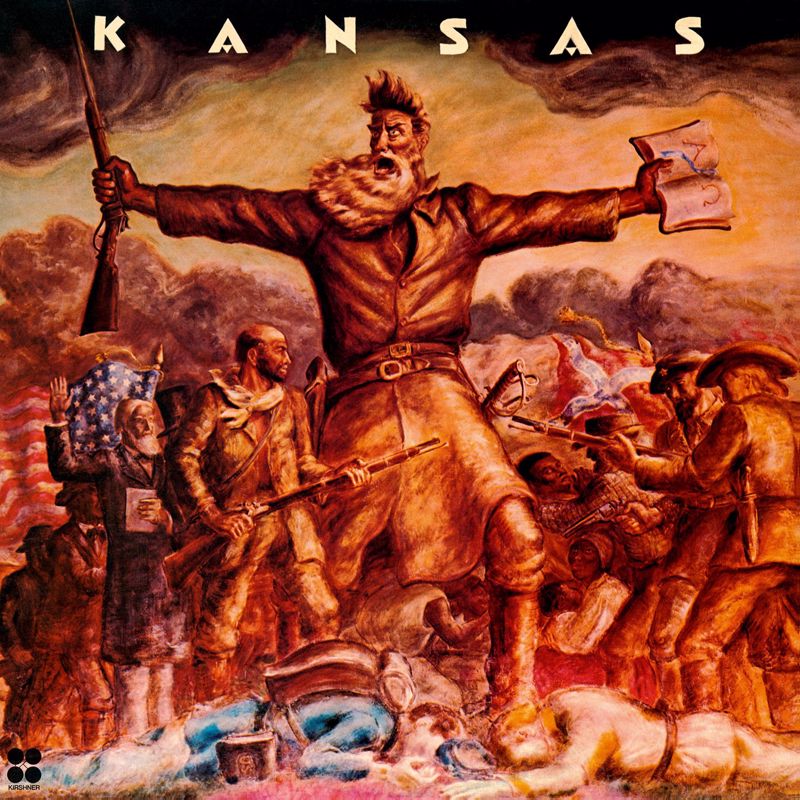 Kansas’ debut album cover.
After their successful debut Kansas went on to release 16 studio albums and seven live albums. The band later faced creative differences, lineup changes and conflicts with their record label. However, Kansas plays on to this day and is currently on a tour of North America. Kansas played a set at Washburn University accompanied by the college’s orchestra on Feb 7, 2009, and the recording became the live album There’s Know Place Like Home. Kansas’ latest studio album, The Absence of Presence, was released July 2020. It was praised by critics and the band’s fans alike.
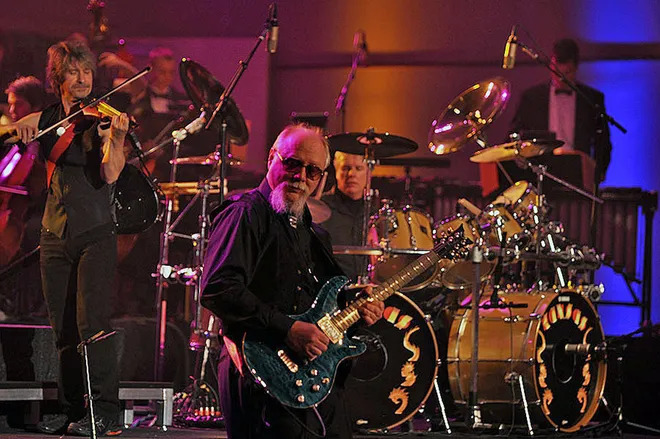 Kansas at the Know Place Like Home concert at Washburn University. Image courtesy of the Topeka Capital-Journal.
The Topeka Symphony Orchestra
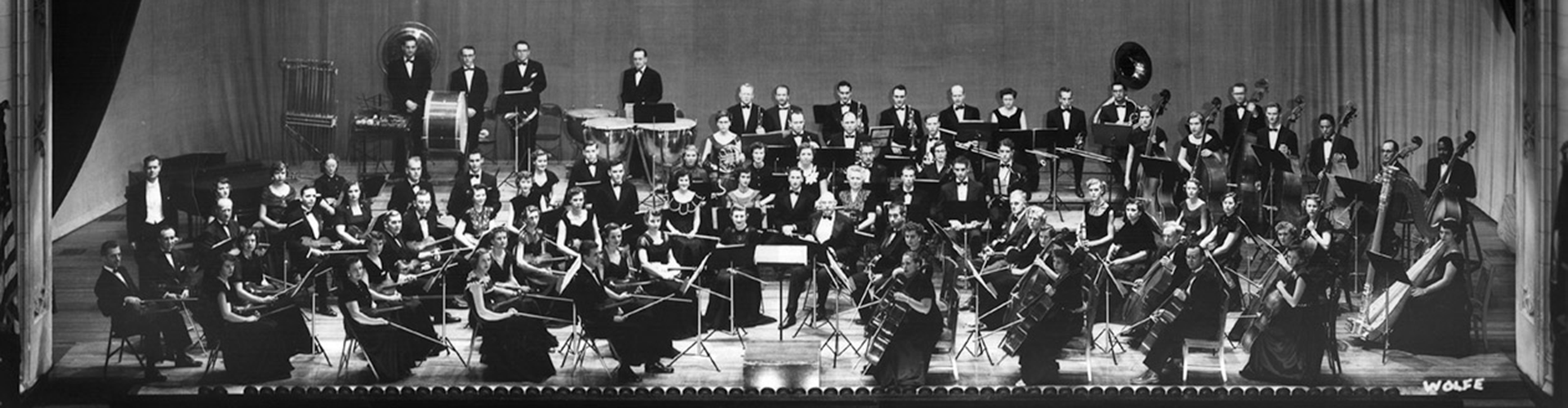
Our professional symphony known for their performances of classical pieces, film scores and holiday tunes began as the all-volunteer Topeka Civic Orchestra (TCO). Washburn University professor Everett Fetter, who headed the school’s music department for many years, founded the Orchestra in 1945. In the beginning, TCO members were mostly student musicians from Washburn University and Topeka High School. Their first rehearsal was on Nov 6, 1945, and played their first concert at the Municipal Auditorium on Dec 6, 1948.
TCO started the Young Artists Competition in 1953, allowing high school students to audition to perform a solo concerto accompaniment with the orchestra. In 1957 TCO founded the Topeka Symphony Youth Orchestra to give local youth from grades 4-12 music performance opportunities. TCO has also shown its dedication to the education of young local musicians through its scholarship fund for music students.
In 1980 the Topeka Civic Orchestra became the Topeka Symphony Orchestra (TSO) and shifted toward employing paid professional musicians. Fetter served as the ensemble’s conductor and music director until 1976 when Jack L. Herriman succeeded him. John Strickler became the conductor in 1989 followed by current music director Dr. Kyle Wiley Pickett in 2012. The TSO currently plays monthly concerts from September to May each year. They will complete this year’s season with a night of music from Star Wars and Indiana Jones composer John Williams.
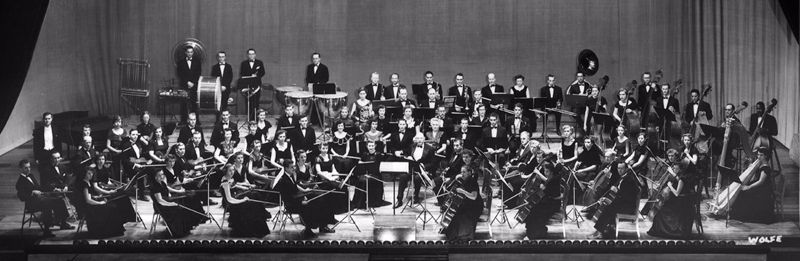 Image courtesy of the Topeka Symphony Orchestra
The Sunflower Music Festival
In 1987 the Kansas City Lyric Opera conductor Russell Patterson and concertmaster Charles Stegeman had a history-making dinner conversation about an idea for a summer classical music festival in Topeka. Patterson helped the festival receive funding from Hallmark Cards and the local banker Dean Hodges. Since the festival’s beginning they have performed concerts at Washburn University’s White Concert Hall. The Sunflower Music Festival focuses on chamber music where quartets, trios and other small groups of instrumentalists play together. They play a free concert series for two weeks each June.
The festival mostly consisted of professional musicians until 1993, when some regular musicians proposed the idea for a young artist program to Washburn music department chairman Kirt Saville. Ever since then talented young musicians from across the country audition to take part in the program. Those chosen receive coaching from Sunflower artists, including Washburn music professors. The Blanche-Bryden Foundation offered their financial support to the festival in 1994, renaming the youth program the Blanche-Bryden Sunflower Music Festival Summer Institute. The festival added special programs for string quartets and an apprenticeship opportunity for young professional musicians in 2008 and 2009. To this day, the festival is a popular event for classical musicians and music lovers in Topeka.
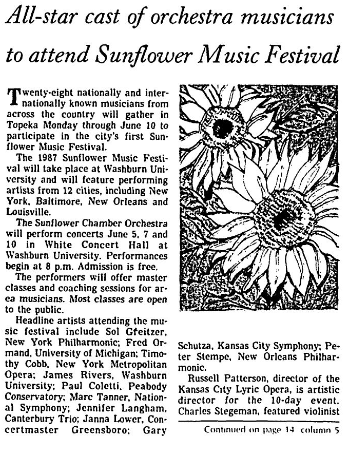 The local newspaper advertises the 1987 festival concert. Image courtesy of the Topeka Capital-Journal.
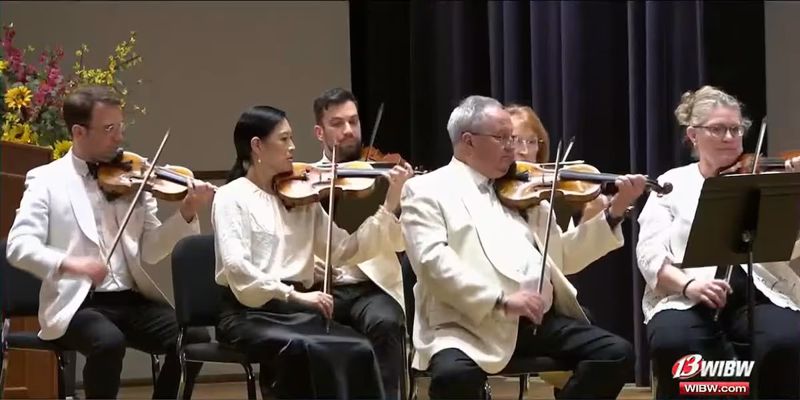 Sunflower Music Festival musicians play during the 2025 festival concert series. Image courtesy of WIBW.
Marshall’s Civic Band
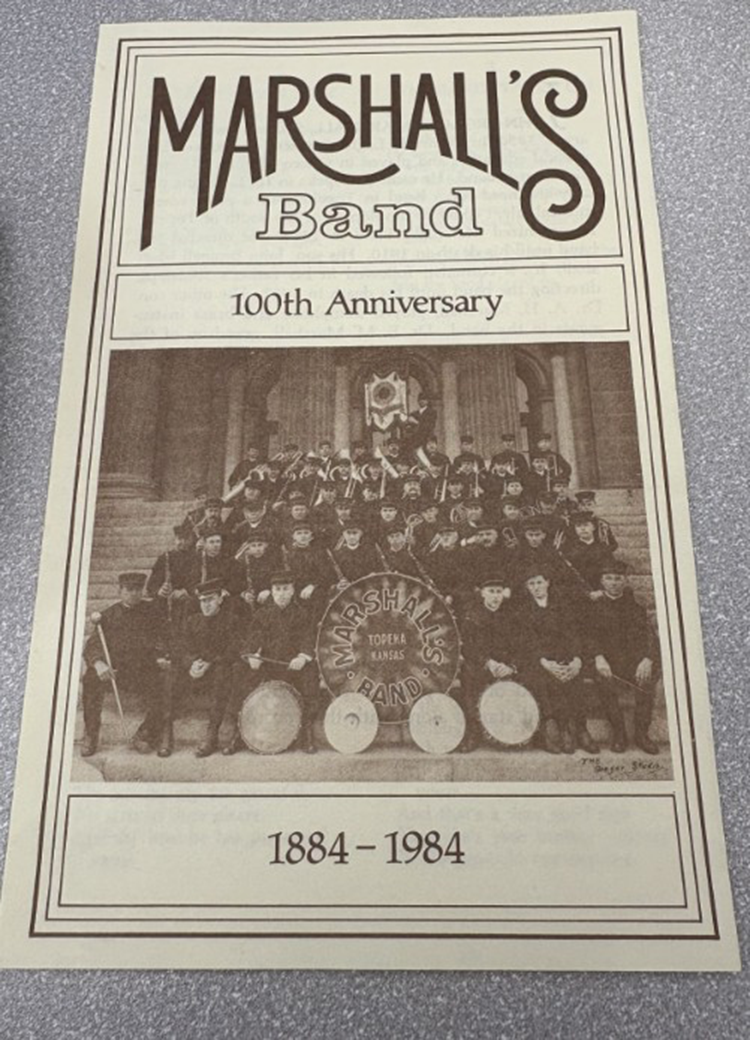
John B. Marshall set out to organize a band, the First Ward Republican Flambeau Club Band, for the 1884 campaign of Republican presidential candidate James G. Blaine. At the time “flambeau clubs” held parades and rallies in favor of political candidates. Marshall planned for his band to dissolve after the election but they decided to keep playing.
After that year’s election the band changed its name to Marshall's Civic Band in honor of its creator and director. The band quickly earned great acclaim, winning awards in competitions and gathering attention in San Francisco after playing as the department band of Kansas’ Grand Army of the Republic in 1886. Marshall’s Band began to absorb former members of the Capital City Band, their former rival, as they gained popularity. The band toured throughout the United States and it represented Kansas at the Chicago World’s Fair in 1892.
When they weren’t touring the band focused on civic events in Topeka, playing in many city parks and auditoriums. John B. Marshall, Jr. took on his father’s role in 1915. In December 1925 renowned composer and conductor John Philip Sousa brought his band to Topeka where they played with Marshall's Band. In the 1920s the band began to broadcast programs on WIBW. Marshall’s Band still plays today, and they are known and loved for their outdoor summer concerts.
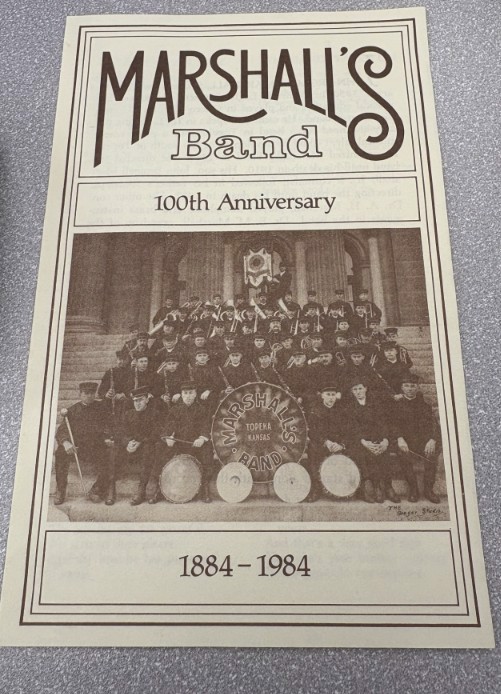 A program for the Marshall Band’s 100th anniversary concert. Image courtesy of TSCPL.
Mariachi Estrella
In the 1970s violinist Teresa Cuevas formed the band Mariachi Estrella with six other musicians: Connie Alcala, Dolores Carmona, Linda Rokey Scurlock, Dolores Galvan, Rachel Galvan Sangalang and Isabel Gonzalez in Topeka’s Oakland neighborhood. The group met when they sang in the choir at Our Lady of Guadalupe church and adapted church hymns into a mariachi style. The all-female mariachi brand was a novelty at the time since mariachi music was mostly the domain of male musicians.
Mariachi Estrella had been steadily gaining popularity and attracted the attention of record labels before disaster struck the band. As they prepared to play at a tea dance at the Hyatt Regency Hotel in Kansas City, the hotel’s skywalk collapsed and killed Alcala, Carmona, Scurlock and Galvan. Cuevas and Sangalang also suffered injuries from the accident. Gonzalez, who was home with her infant daughter at the time of the collapse, was the only member physically unharmed. Even after the band had been fractured by this tragedy, the living members continued to play together and shape Topeka’s music scene. The “Mariachi Divina” monument at the Topeka Performing Arts Center honors the entire group, and a statue of Teresa Cuevas stands on Kansas Avenue in downtown Topeka. Teresa Cuevas’ granddaughters Maria and Tess Cuevas inherited their grandmother's passion and talent for music and they formed the band Maria the Mexican in her honor.
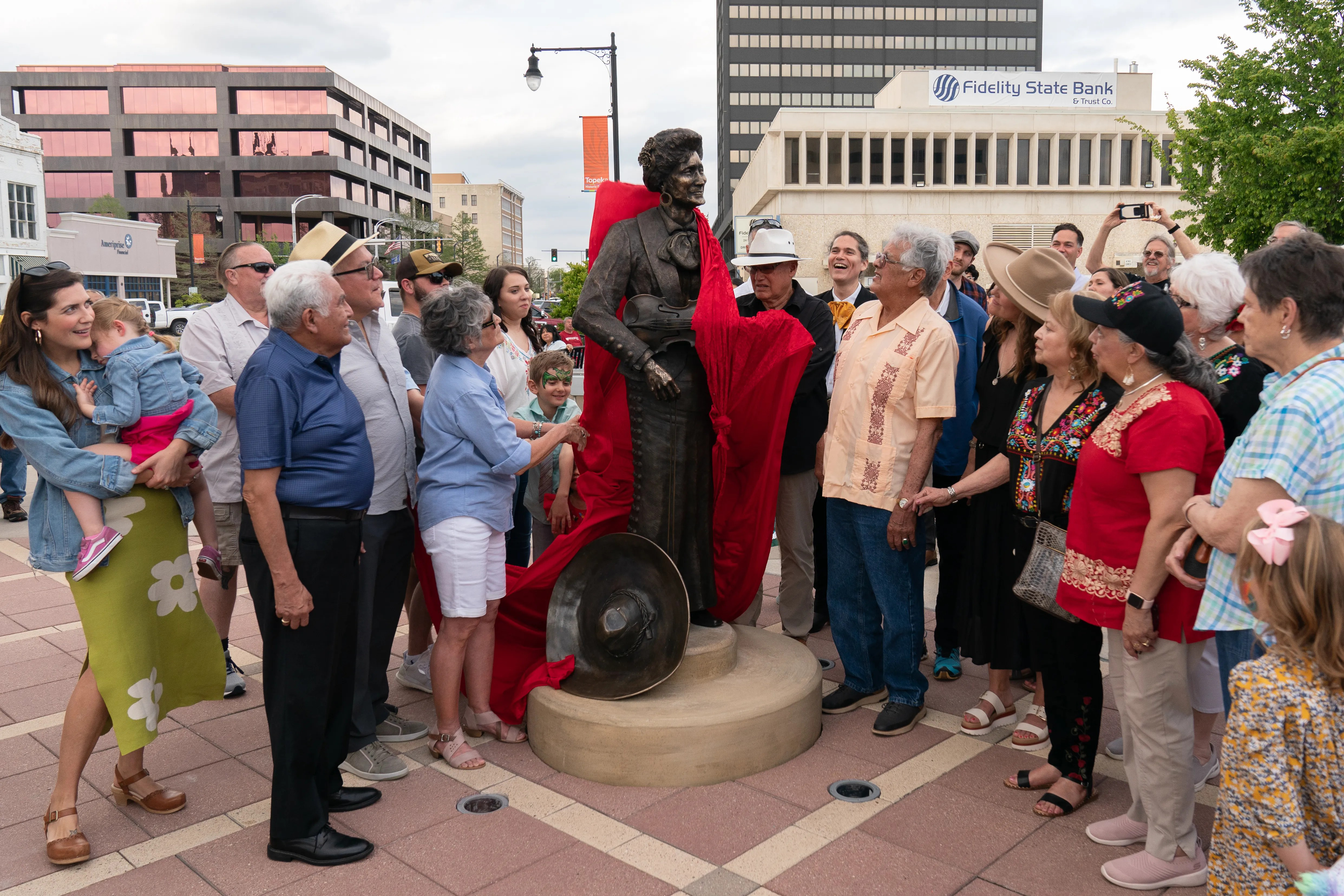 The Teresa Cuevas statue in downtown Topeka is uncovered for the public. Image courtesy of Topeka Capital-Journal.
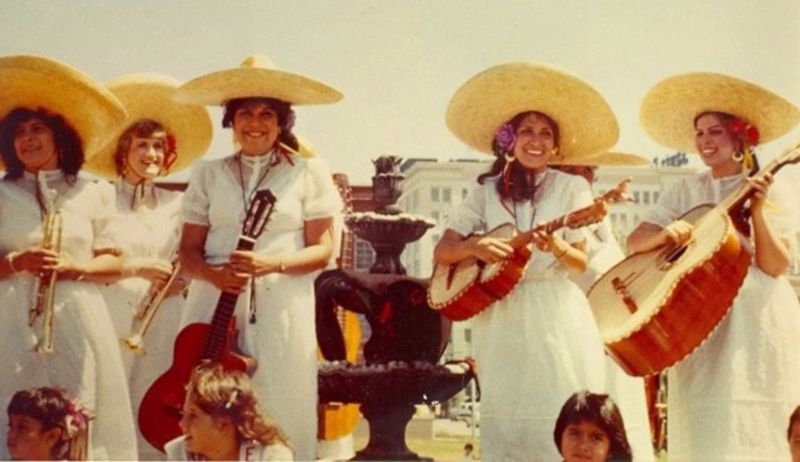 From left to right: Dolores Gonzalez Carmona, Linda Rokey Scurlock, Dolores Galvan, Connie "Chae" Alcala and Rachel Galvan Sangalang. Image courtesy of the Cuevas family.
How to learn more about Topeka's music history
The library’s Topeka Room holds a range of information about our city’s history, including musicians who made their names here. Our vertical files contain newspaper clippings, photographs, concert programs and other relics of Topeka history. Search our index online or in the Topeka Room or to discover artists in our files. We also have books and documentaries with a wealth of information on local performers. If you’d like to read newspaper articles, we recently gained access to more digitized Topeka newspapers. These are accessible anywhere with your library card from our Research Tools list.
Our vertical files index shows where you can find information on local musicians. Image courtesy of TSCPL.
Besides learning the history of these artists, you can experience their music for yourself at the library. Our movies and music section has several CDs and DVDs of local productions, and the Topeka Room houses some recordings as well.