









Uncover local history using newspapers in the Topeka Room
Read All About It! Research using newspapers in the Topeka Room
Newspapers can be an amazing source of information for anyone researching local history or genealogy. Our Topeka Room has many ways you can access the various newspapers that were published in Topeka and Shawnee County over the years. We recently expanded our collection of digitized Topeka papers with the addition of the digital archives of the Topeka Daily Capital, the Topeka State Journal and the Topeka Capital-Journal.
What can we learn from historic newspapers?
Whether you’re a genealogist or a historian, there are so many treasures to find in historical newspapers. Uncover the major local, national and international stories that were chronicled and read about them as if you were living it day by day. It can be fascinating to see how a well-known story was first reported and then unfolded over the coming weeks and months.
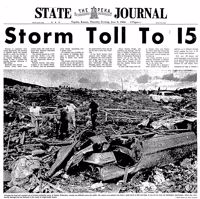
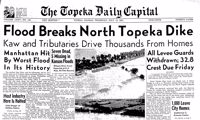 You can follow coverage of major events such as the 1951 flood and the 1966 tornado using the library's digitized historic newspaper collection.
For the historian, newspapers can help determine when a home was built or a business was opened. For the genealogist, you find all sorts of vital information such as birth and marriage announcements, as well as obituaries. Older papers also had society columns, which detailed the parties, celebrations, debutantes and engagements that took place in Topeka’s high society.
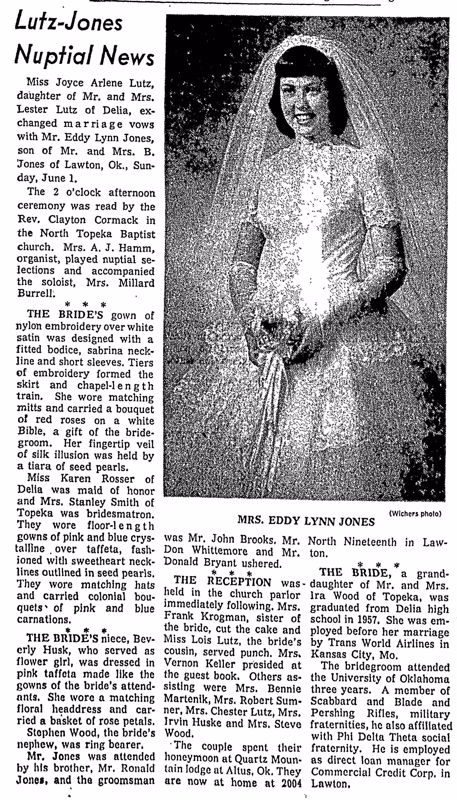 Older wedding notices can provide details as to what the bride wore, who the attendants were and even what flowers were in the bouquet.
It is fascinating to see what was considered newsworthy back in the day. Papers often contain the comings and goings of various families, when they went on vacation and to where. The advertisements also give a peek into what was popular and available to buy, especially when it comes to medicine and fashion.
 Advertisements found in historic newspapers show what fashions were popular, as well as what stores provided these services in Topeka.
Topeka led the state in publishing

The Kansas Freeman was the second paper published in the territory, the first being the Leavenworth Herald.
Topeka has an incredibly rich history in the newspaper industry. The first newspaper published in Shawnee County was the Topeka-based Kansas Freeman, which was first published on July 4, 1855, when this was still Kansas Territory. The Freeman was owned by E.C.K. Garvey and was an abolitionist paper that dedicated much of its first issue to opposing the extension of slavery into the Kansas territory.
During the next 100 years Topeka became the publishing industry leader in Kansas. Between 400 and 500 separate papers were published in Shawnee County between 1855 and 1947. Even small communities and towns in the county – such as Rossville, Richland, Silver Lake and Dover – had their own local papers. In Topeka several publications sprang up to cater to the new immigrant communities, with the town boasting papers printed in both German and Swedish.
For the burgeoning African American population Topeka was home to many of the state’s most important black-owned newspapers. William L. Eagleson, who was born a slave in 1835, founded the state’s first black-owned paper the Colored Citizen in Fort Scott in January 1878. A few months later Eagleson moved the publication to Topeka due to the city’s growing African American community. In 1899 Nick Chiles purchased the Topeka Call and renamed it the Topeka Plaindealer. The Plaindealer went on to become the most successful African American newspaper in Kansas.
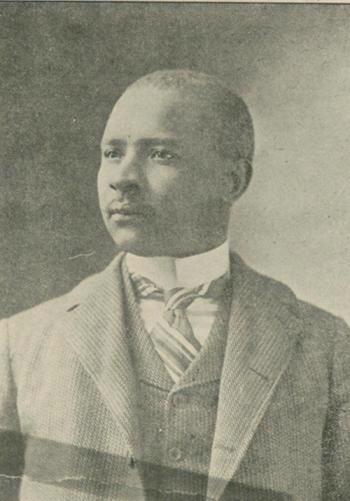
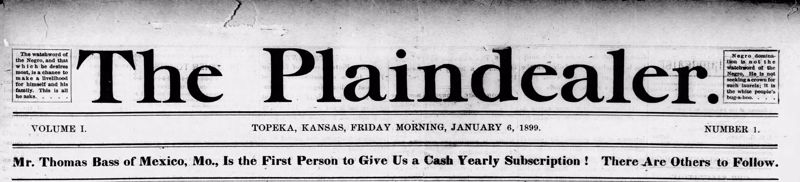
Nick Chiles' Plaindealer was one of the longest-running Black newspapers in the country.
For most Topekans the choice for their source of news came down to the two main newspapers: the Topeka Daily Capital and the Topeka State Journal. Both publications began in 1879 and for more than 100 years they brought the citizens of Topeka local, national and international news. The State Journal was the morning paper and the Daily Capital was the evening paper. In 1981 they merged to become the Topeka Capital-Journal, which is the main Topeka paper today.
Searching historic newspapers in the Topeka Room
There are several ways to search through historical newspapers. Almost every issue of the major Topeka papers (the Daily Capital, the State Journal, the Capital-Journal) are available on microfilm. The Topeka Room has two digital microfilm readers that allow you to print, email or save an article to a flash drive. The collection also includes other Topeka papers, such as the Plaindealer, the North Topeka Mail, and the Topeka Commonwealth. Unfortunately, microfilmed papers are not keyword searchable, so you need to have a good idea of the month and year of the article you’re looking for.
 Thankfully, the library has two databases that allow you to search through the Topeka papers without knowing a specific date. For articles published through 1922 you can use Newspapers.com, which is available anywhere with your library card! The library’s subscription includes the World Edition so you can search digitized papers worldwide.

The Topeka State Journal (1958-1980), the Topeka Daily Capital (1948-1980), and the Topeka Capital-Journal (1980-present) can now be accessed via NewsBank.
If you are looking for something published in the Topeka Daily Capital, the Topeka State Journal or the Topeka Capital-Journal, you might be able to find it using NewsBank. Recently the library gained access to the archives of the Daily Capital from 1948 to 1980, the State Journal from 1958 to 1980, and the Capital-Journal from 1980 to the present. Like the papers in Newspapers.com, these are keyword-searchable and available anywhere with your library card!
Tips and tricks searching old newspapers
While having many Topeka papers digitized and readily available is an amazing boon to researchers, there are a few caveats. One of the biggest is to always verify the validity of the story, especially in the older papers. Many times the paper staff did not let a little thing like details get in the way of a juicy story. When they were competing with other local papers, they often stretched the truth to get more people to buy their paper. So always corroborate what you read through other sources.
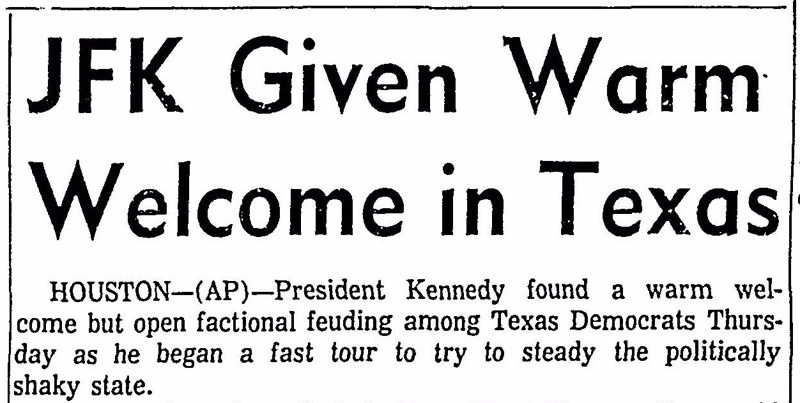
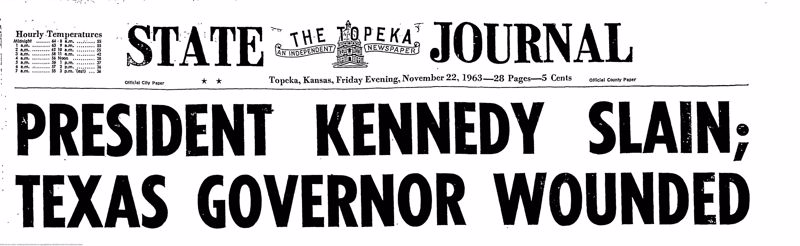
Coverage of events can depend on which paper you're reading. Since the Topeka Daily Capital was the morning paper, it doesn't cover the assassination of President Kennedy on the day it occurred. However, the Topeka State Journal (the afternoon paper) does cover the event.
Another thing to bear in mind is that the searchability of the papers can be hit-and-miss depending on the OCR (optical character recognition) software used. This combined with the fact that names are often misspelled can create headaches when searching for articles. It is also important to remember that Topeka had two papers for most of its history so you need to check both papers. Coverage was not the same between the State Journal and the Daily Capital, and they often had wildly different takes and opinions on events happening in town.
Visit us for more research help
No matter if you are looking for an ancestor’s obituary or the article that details your time on the All-State track team, if you’re using the microfilm readers or browsing our online newspapers, the staff in the Topeka Room are always happy to help guide you on your search or answer any questions. We invite you to explore all the ways to read all about Topeka’s history through the eyes of those who lived it.