








Local History: Who let the lizards out?
Local History: Who Let the Lizards Out?
One of my kids’ favorite summer pastimes is going out in the front yard and attempting to catch the seemingly hundreds of small lizards that call our front garden home. They never succeed. The little creatures are too quick and can disappear into tiny cracks where the kids and their nets can’t reach.
I’ve often thought about the local lore surrounding these small lizards. I knew they weren’t native to Kansas, but their origin story seemed to change every time I heard it. They were released by a private collector. The exotic pet store where they were being sold caught fire and the lizards escaped and went wild.
I finally decided to track down the real story using the tools available in the Topeka Room. The story turns out to be even more interesting than I originally thought.
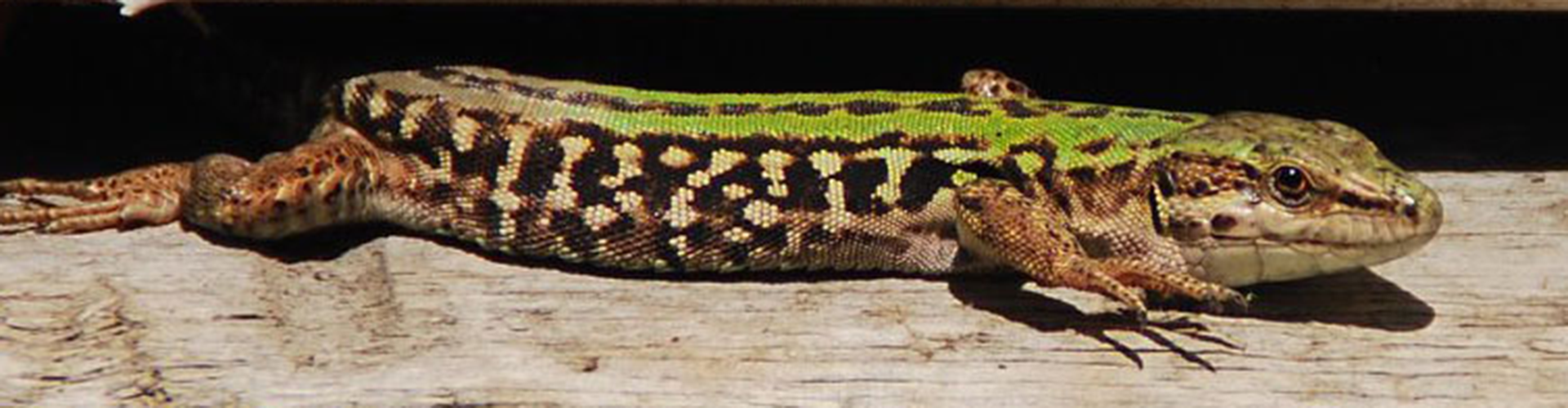
Meet Podarcis siculus
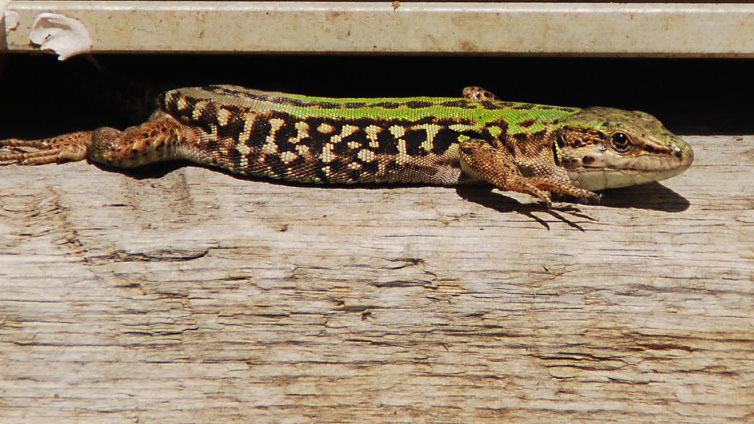
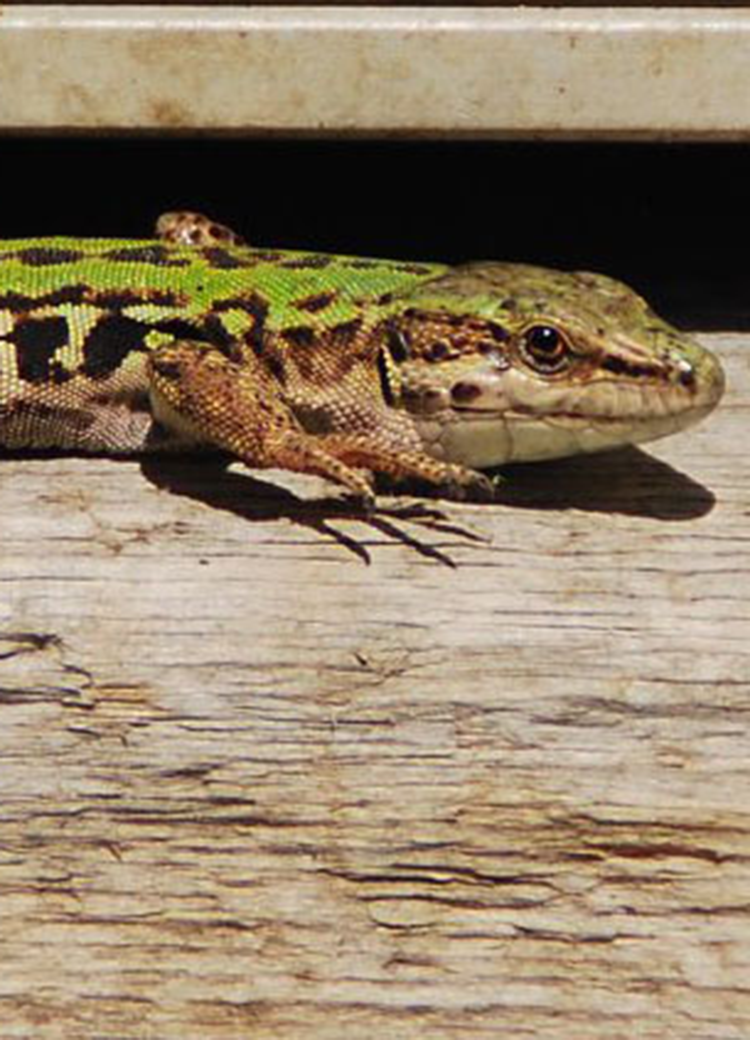
An Italian wall lizard.
Note the bright green back and brown spots along the side.
The lizards that have seemingly taken over Topeka are known as Italian wall lizards (Podarcis siculus). As their name suggests, they are not from Kansas nor from the United States. They are found in southern and southeastern Europe. They are incredibly hardy and have a generalized diet, which means they can thrive in many types of environments.
The easiest way to identify them is by their bright green coloring on the top of their bodies, with brown stripes and spots running down the top and sides. The adults are usually about three to four inches long.
While they are technically an invasive species, herpetologists in Kansas say the lizards have done no noticeable damage to the local ecosystem and only slightly compete with other urban lizards and reptiles for food. Over the last several years, populations of Italian wall lizards have crept up primarily in Topeka, Lawrence and Olathe, but they have also been found out west in Hays.
Tracing the Wall Lizards’ Origins
Upon doing some preliminary research, most leads pointed to an unnamed exotic pet store that stood at 21st and Gage in the 1950s. But none of the Topeka city directories from the 1950s or even the 1960s listed a pet store in that area. I finally found a job ad in the Topeka Daily Capital for a store named “Quivira Specialties” at 4010 W 21st St, which was owned and operated by Dr. Charles E. Burt.
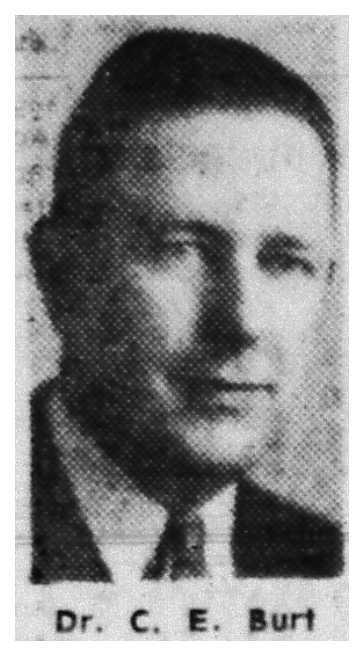
Dr. Charles E. Burt, ca. 1960.
(Photo courtesy of the Topeka Daily Capital)
Charles Burt was born in Neodesha, Kansas, on August 12, 1904. He graduated with a master’s degree in science from Kansas State University and received his PhD in 1930 at the University of Michigan.
From 1929 to 1930 Burt worked as an assistant curator of herpetology at the American Museum of Natural History in New York City. While there, his work concentrated on studying and classifying the lizards and reptiles found in the Great Basin region and in South America. He and his wife, May, went on several collecting expeditions together and co-wrote reports and scientific papers.
In 1930 Dr. Burt became a professor of Biology at Southwestern College in Winfield, Kansas, where he spent the next 14 years of his career. During the summers the Burts worked under field grants collecting specimens for the Smithsonian Institution in the American Southwest and in Mexico. One of the species he collected, the Canyon Spotted Whiptail, was named after him (Aspidoscelis burti).
Little Shop of Reptiles
In 1944 the Burts moved to Topeka and opened a biological specimen shop, Quivira Specialties. The shop soon became a topic of conversation in Topeka with the Topeka Daily Capital proclaiming Quivira Specialties “the only of its kind in Kansas.” Most of the store’s business came via mail order from college biology labs around the country, but it also offered live animals for pets.
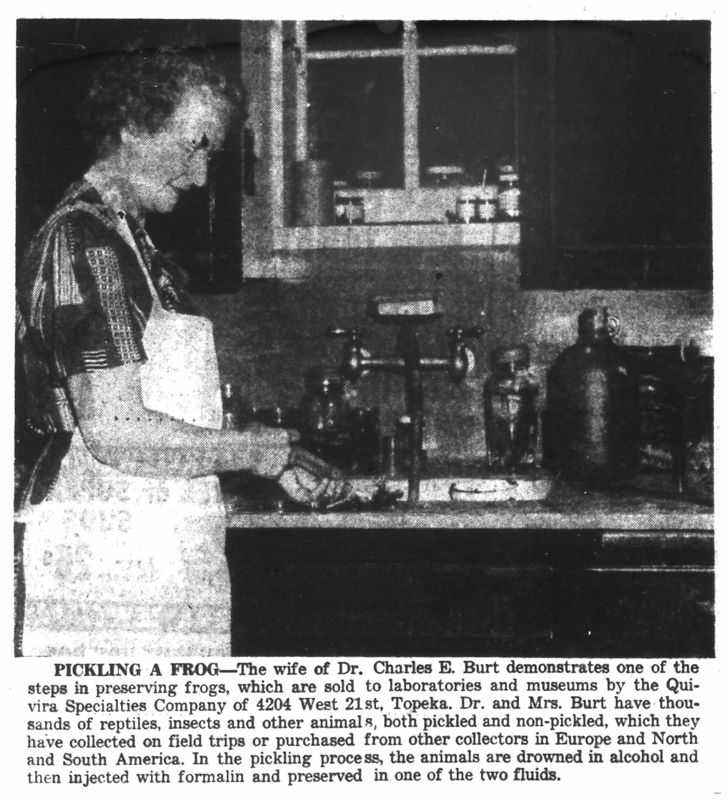
The Topeka Daily Capital profiled Quivira Specialties
and the Burts on May 25, 1952.
(Photo courtesy of the Topeka Daily Capital)
Quivira Specialties was a family business. Dr. Burt was the president and ran most of the day-to-day operations. His wife, May, did the accounting but also regularly prepared wet specimens in their home kitchen. Other employees were biology students at Washburn University.
Besides snakes and lizards, Quivira Specialties was also known for selling alligators as pets. Collectors in Louisiana would ship them as babies to Dr. Burt. One newspaper story about the store said that owners often tried to take the alligators back to the store when they grew up. The shop also sold bedbugs, boa constrictors, snails and Mexican jumping beans.
Live specimens were shipped to the store from Europe, Latin America, Canada and the United States. When Dr. Burt couldn’t find a collector to send him specimens, he and his wife would go collect their own on field trips to various parts of America. On one trip, the Burts collected hundreds of bats they found roosting in caves during the day.
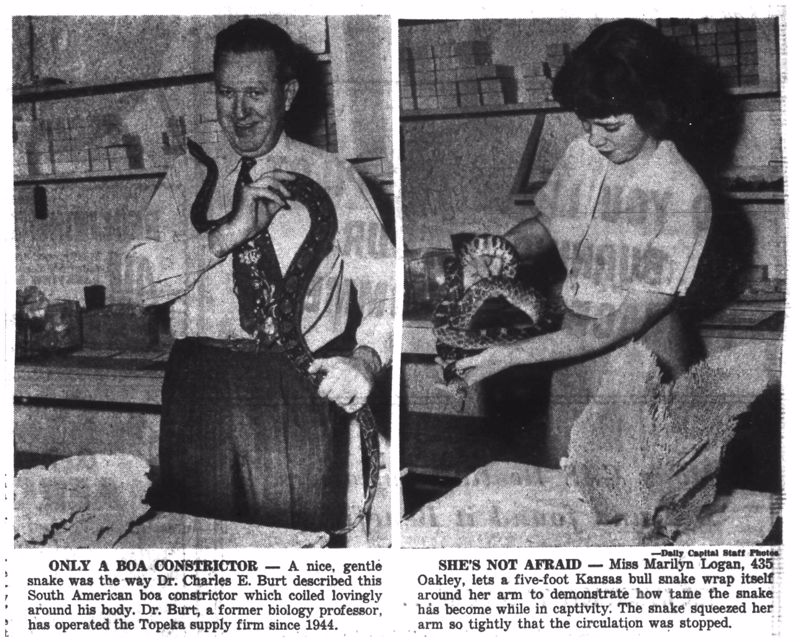
Snakes - both alive and preserved - were a mainstay at Quivira Specialties.
(Photo courtesy of the Topeka Daily Capital)
Amazingly, Dr. Burt claimed he had only been bitten by a snake once in all his years as a herpetologist. He’d been uncrating a shipment of live cottonmouths when one of the snakes bit him through the cloth sack they were stored in. After a few days in the hospital, Dr. Burt was back at work as if nothing had happened.
Dr. Charles Burt died in 1963 of cancer and the shop he operated for almost 20 years was closed.
Lizards on the Loose
While it isn’t recorded that Quivira Specialties sold Italian wall lizards, there are many who remember seeing them in the shop being sold as pets. Charles Burt had always been fascinated with lizards and made a point to keep a wide variety available in the store.
No one knows for sure how the wall lizards got out of the store, but shortly after Dr. Burt died, residents in the neighborhood around 21st and Gage reported seeing small green lizards throughout the area. Some claimed the lizards had been released when the store closed, but having witnessed these creatures wriggle into some tight spaces, they may have just gotten out of their cages in the store.
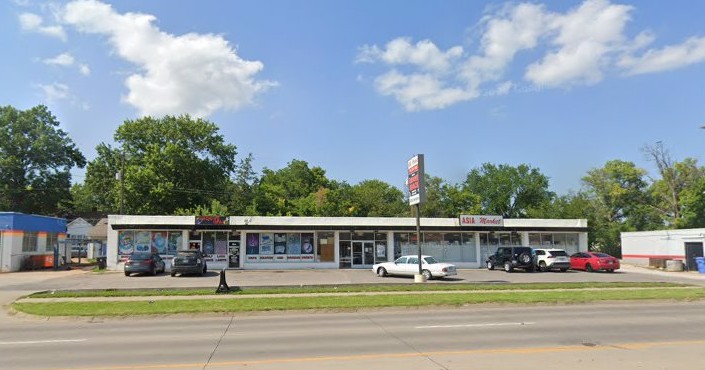
How 4010 SW 21st Street, the home of Quivira Specialties, looks today.
During the last 63 years the lizards have expanded their territory to include most of Topeka. For several years in the late 1990s/early 2000s, an annual lizard hunt was conducted by Joseph T. Collins, a herpetologist and adjunct professor at Washburn University. Local college and high school students would document and collect any Italian wall lizards they could find.
While they may not be native, these unique little lizards have become Dr. Charles Burt’s legacy and an unofficial mascot of the city of Topeka.