









Celebrating Black History Month with music
Celebrating Black History Month with Music
It’s nigh impossible to listen to almost any type of American music and not recognize the impact, influence and importance of Black Americans’ contribution, musical foundation or both. Another thing February is well-known for is its cold temperatures and dreary days, most of the time. That makes me want to listen to music that is upbeat and joyful to help combat the cold weather. I’ve got three of my favorite Black American artists who never fail to put a smile on my face and get me to dance.
Prince and the Revolution – Purple Rain: Music from the Motion Picture (1984)
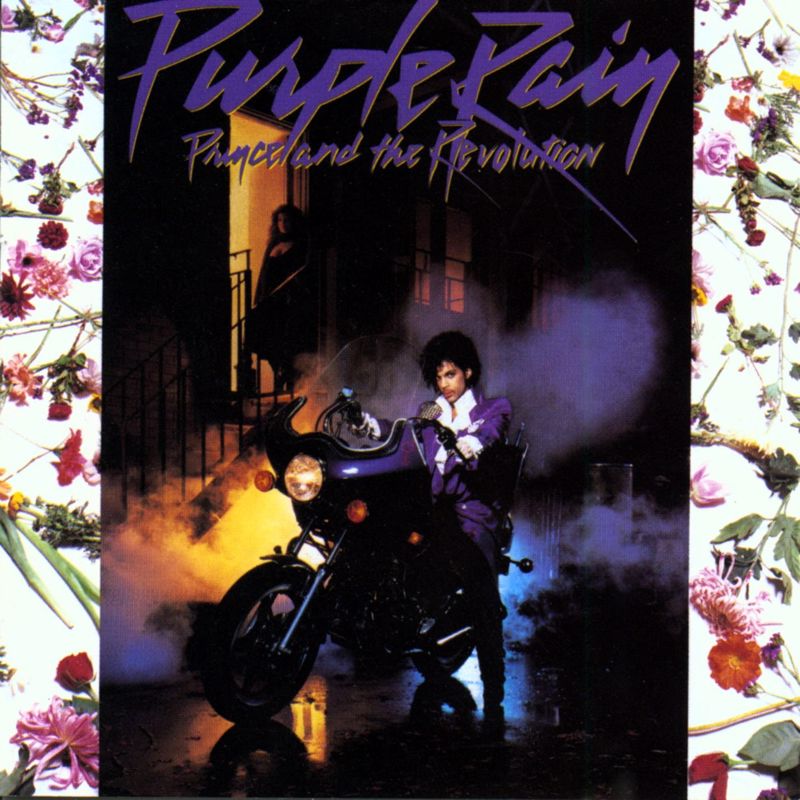 Prince needs no introduction, but I’d like to share my introduction to him. I was about 5 or 6 when I was first able to recognize Prince's music. My dad would listen to the radio constantly and he enjoyed watching MTV. I think I might have caught a glimpse of the controversial video for “When Doves Cry.” I’m also pretty sure my dad watched the film Purple Rain and I probably also watched it. I was just too young to remember!
This album is different from his previous albums in that it’s more musically substantial with extravagant, synthesized and colorful substance to the production and performances. When I was old enough to appreciate the actual album three songs really stood out to me and they continue to make me smile and dance to this day.
The album starts out with an absolute banger of a track, “Let’s Go Crazy.” The beginning starts out with an organ, sounding like a worship service with Prince playing the part of pastor to the congregation. In the lyrics he’s reminding us of how difficult life is and that we should have as good of a time as we possibly can until we can’t anymore. One of my favorite things about this song is how it simultaneously contains elements from hard, glam and funk rock. Prince’s guitar skills remind you that yes, he can be funky, but on this track he’s having a good time shredding.
“When Doves Cry” is easily one of Prince’s most recognizable songs. Here is another song that can be categorized as different genres but why would you want to? The coolest part of this song is that it doesn’t have a bass line. After a discussion with the singer Jill Jones (who collaborated with Prince in the 1980s and 1990s), Prince decided the song would sound too conventional with the bass line left in. Also of note is the fact that he performed all vocals and all instruments on the track. The song is about his character from Purple Rain, the Kid, dealing with both parental difficulties and his love affair with Apollonia. I’m sure everyone can relate to either or both occurrences, and with it being set to such enduring music, it’ll continue to be remembered for ages to come.
Even though I was a bean sprout of a human when I first heard “Purple Rain,” I remember it being so very different from other similar songs. It’s so similar to a rock ballad and a Gospel hymn. Mellow isn’t a word I would normally use to describe Prince’s music, but this song is mellow. It's also slightly haunting. Maybe it’s the fact that the song was recorded live at a benefit concert for the Minnesota Dance Theatre in Minneapolis. It could also be that it was originally supposed to be a country collaboration with Stevie Nicks, but after listening to a 10-minute instrumental version she declined feeling overwhelmed by it. Or it could that Prince called Jonathan Cain from Journey and asked him to listen to it to make sure it wasn’t too similar to Journey’s “Faithfully.” Cain reassured him the only similarity was the same four chords. In the end it’s that there is so much raw emotion in this specific recording. In the film each verse ties into each of the Kid’s difficult relationships and his yearning to reconcile. The song is dedicated to the Kid’s father. I know Prince put his all into everything he did, but “Purple Rain” is a great example of truly becoming one with your music, especially during the performance of it.
Please check out this album if you haven’t listened to it in a long time, or if you haven’t ever listened to it. You can also check out the film Purple Rain at the library as well, on DVD or Blu-Ray. You won’t be sorry!
Earth, Wind & Fire – Greatest Hits (1998)
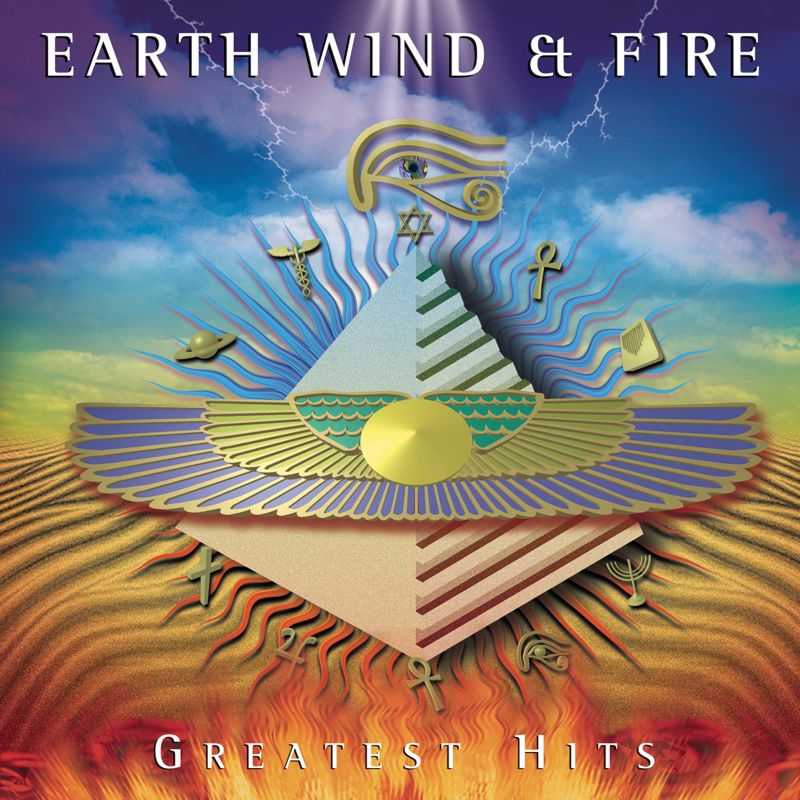 My mom’s records were stored in a milk crate in her closet. When I was around 4 years old I would regularly try to peek at them. She had a red album with a giant gold disc on the front of it, and I later learned it was an album by Earth, Wind & Fire. They are my mom’s favorite band of all time, next to the Commodores. They made an appearance in the musical comedy film Sgt. Pepper’s Lonely Hearts Club Band. I remember thinking how different and amazing their cover was of the Beatles’ Got to Get You Into My Life.
Earth, Wind and Fire's music is a blend of many different genres, while also evolving the sound of Black pop music. Not only that, but as time has gone on, their sound has managed to sound both 1970s and modern at the same time. Maurice White formed the band from a band called the Salty Peppers in 1969. They became known for their kalimba sound, the Earth, Wind & Fire Horns’ ability to perform with crisp articulation and expressive phrasing, and the unforgettable sounds of Philip Bailey’s falsetto and Maurice White’s tenor vocals. Here are a few of my personal favorites that are guaranteed to get you dancing and feeling joy.
“September” is a quintessential favorite. This song has truly transcended time from 48 years ago when it was first released as a single in 1978 and on the album The Best of Earth, Wind & Fire, Vol. 1. It was loved by the young people of the 1970s, but it is also a favorite of even Gen Alpha (source: my nephews). Guitarist Al McKay composed the song, while vocalist Maurice White and songwriter Allee Willis wrote the lyrics. It was completed in over a month. Willis was initially bothered by the “ba-dee-ya" lyric, asking White to rewrite it. His lesson to Willis regarding what she considered to be nonsense was "never let the lyrics get in the way of the music." And he was right. The composition of this song by McKay is phenomenal, especially when you consider the different harmonies intermingled throughout the entire song. Ask any professional musician and they can tell you how fun of a masterpiece this is to play, as it is to listen to or dance to.
Another guaranteed groove is “Serpentine Fire,” which was first released on EWF’s 1977 album All ‘n All. If you want something really funky, this is the song. The chorus sang by both White and Bailey in a strong falsetto is “Gonna tell the story morning glory all about the serpentine fire.” While there is a much deeper explanation of what exactly Serpentine Fire is, from Kundalini yoga, the simple explanation is that the Serpentine Fire is your creative energy. It certainly helps to get you fired up and ready to do whatever you’re going to do.
I can’t forget the galvanic funk track “Getaway.” First released in 1976 on the album Spirit, this is one of the few songs White didn’t have a hand in writing. Peter Cor Belenky and Bernard “Beloyd” Taylor wrote this hit. It fit the theme of the album in that it could be interpreted as looking outside of yourself for your higher self or consciousness, but also as looking for something other than the everyday life everyone experiences. It was initially written in a rock style, making it a bit difficult for the band to record in the studio, but once they did it in the Earth, Wind & Fire way, it came out great.
One last note for Earth, Wind & Fire is that if you get a chance, check out their videos on their official account on YouTube. If you thought this music sounded joyful, just check out their performances. That’s how to have fun with music!
Count Basie Orchestra – The Atomic Mr. Basie: the Complete Atomic Basie (1957)
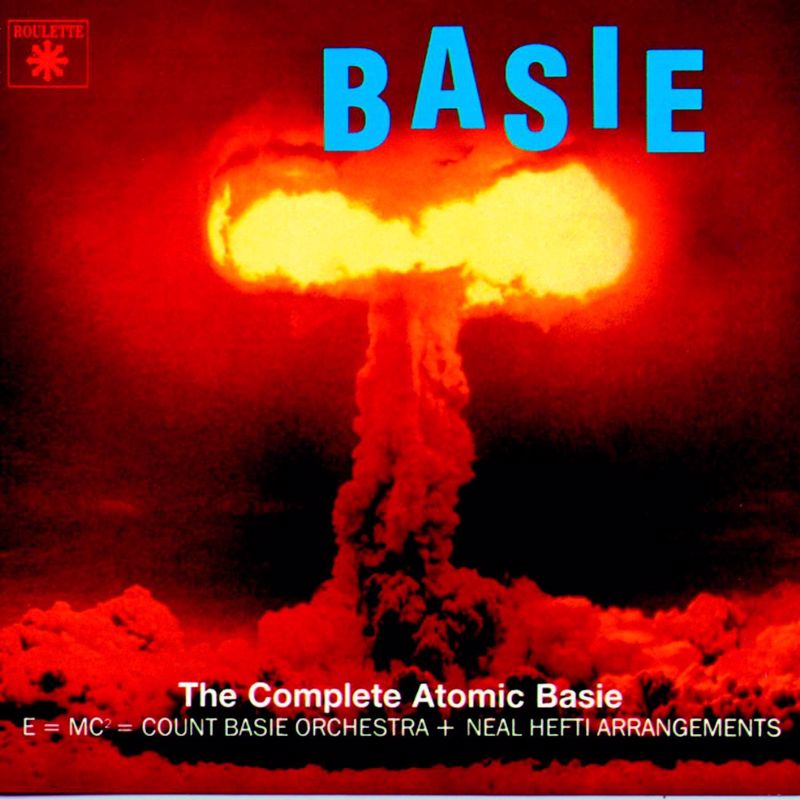 If I had grown up in the late 1930s and into the 1940s, my favorite band would have been the Count Basie Orchestra. They were a 16 to 18-piece big band that originated in Kansas City, Missouri, in 1935. When Basie arrived from New Jersey in 1927 he played with Walter Page’s Blue Devils then joined rival band leader Bennie Moten and his band in 1929. When Moten died in 1935, Basie left to start his own band taking many of his talented bandmates with him. What set them apart was the band bringing the sound of the highly famous and competitive Kansas City “jam session,” combined with improvised extended solos and riff-based accompaniments,to other places outside of the area.
Even though Basie, with his understated and captivating piano playing and his sharp, immaculate leadership, passed in 1984, the Count Basie Orchestra continues to this day. The current director is trumpeter Scotty Barnhart. This Atomic album was composed and arranged by Neal Hefti, who worked with Basie from 1950-1956. This was one of those great partnerships.
“The Kid from Red Bank” centers on Basie and his underrated piano playing. This song begins with a mighty fanfare right in the beginning, announcing that “The Kid,” Basie himself, is about to take you for a ride. While Basie is known for minimalism in his piano playing, it’s important to remember he was first trained in stride piano. While his playing may be understated, it’s there and strong as it ever has been. The fluctuation between the band’s full-on aggressive sound and Basie’s cheerful, temperate piano creates so much tension that it really invites you to pay attention. Just thinking of dancing to this song is enough to put a smile on my face and I can imagine that same smile appeared on the faces of the dancers back then.
Another fun song is “Double-O.” It starts out pretty quiet with Basie’s piano setting the tempo for everyone else. Once the rhythm section comes in after 4 measures that’s where you hear where the song is going to start going. The saxophones really shine and take the lead on this one with an exquisite solo from Eddie “Lockjaw” Davis on tenor saxophone. The rest of the band starts letting it rip by the third and final chorus of the song with a really dissonant final roar from the entire ensemble. If I could swing dance, this would be fun to trade off with other dancers, taking turns in the middle of the floor just having the time of our lives.
The song “Whirly-bird” provides excitement for listeners, dancers and musicians alike. Davis, once again, shines on this track as the opening sax solo after Basie sets the tempo on the piano in the opening. The trombones give the piece an extra jolt when the melody kicks in. After Davis’s solo the entire band provides one of the most exciting shouts in all the big bands. Afterward there are some brass hits that seem off rhythm, but if you had been schooled in Louis Armstrong, you’d be quite familiar with it. This goes into a drum solo by the skillful Sonny Payne. When we get to the end, as with most of the Orchestra’s compositions, it’s with an energetic roar. Dancers could get lost in the rhythm and upbeat tempo, but luckily, particularly with Count Basie and Neal Hefti, you knew where you were in the song.
