










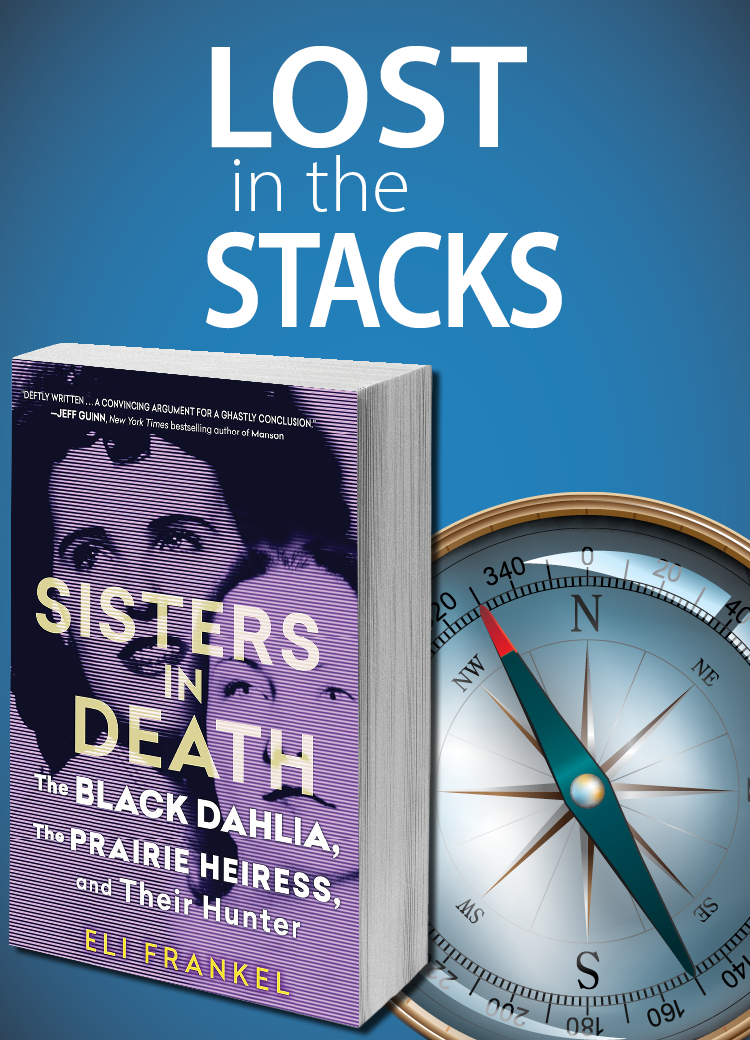
Lost in the Stacks: Sisters in Death
In 1941 an especially gruesome murder shocked Kansas City. While her mother and brother slept nearby, a brazen killer crept into the bedroom of Leila Welsh, bludgeoned her with a hammer, nearly decapitated her with a butcher knife, and after she had bled out, mutilated the body. The murder of the pretty, young teacher on Rockhill Road became a nightmare for Kansas City law enforcement. Despite dirty tricks and payouts from the corrupt Pendergast Machine determined to charge Leila’s brother with the murder, the case remained – and officially remains – unsolved.
Several years later and over a thousand miles away, bystanders discovered an equally gruesome sight: the corpse of a young woman, drained of blood, cut in half at the torso, lay among the weeds in an empty lot in suburban Los Angeles. The killer also carved a leering smile from ear to ear on the victim’s beautiful face. Elizabeth “Beth” Short, soon to be infamously known as “the Black Dahlia,” was a recent transplant from Massachusetts. She relied on acquaintances and dates for money and places to stay. One of her dates was a man from Kansas City who also happened to be an acquaintance of Leila Walsh.
In Sisters in Death: The Black Dahlia, the Prairie Heiress, and Their Hunter Eli Frankel painstakingly details the startling similarities in the murder method and mutilations both victims suffered. He traces the last days of the victims and unnervingly describes how the same man from Kansas City had the means and a possible motive for killing Leila Welsh and Elizabeth Short. Has Eli Frankel finally solved two cold cases that have haunted America for years? You be the judge!
True crime fans will be intrigued by Frankel's conclusions, but anyone interested in Kansas City history will also find a lot to appreciate in Hunter’s vivid portrait of 1940s Kansas City still in the grip of the Pendergast Machine.